Port Botany Container Terminal
The primary deep-water seaport for the state of New South Wales.
Situated on the northern shores of Botany Bay, a short distance south of Sydney's central business district, Port Botany is a vital node in Australia's international trade network. While Sydney Harbour historically served as the city's commercial port, the advent of containerization necessitated a move to a purpose-built facility with vast tracts of flat land for container stacking and deep-water access for modern cargo vessels.
Container Operations and Throughput
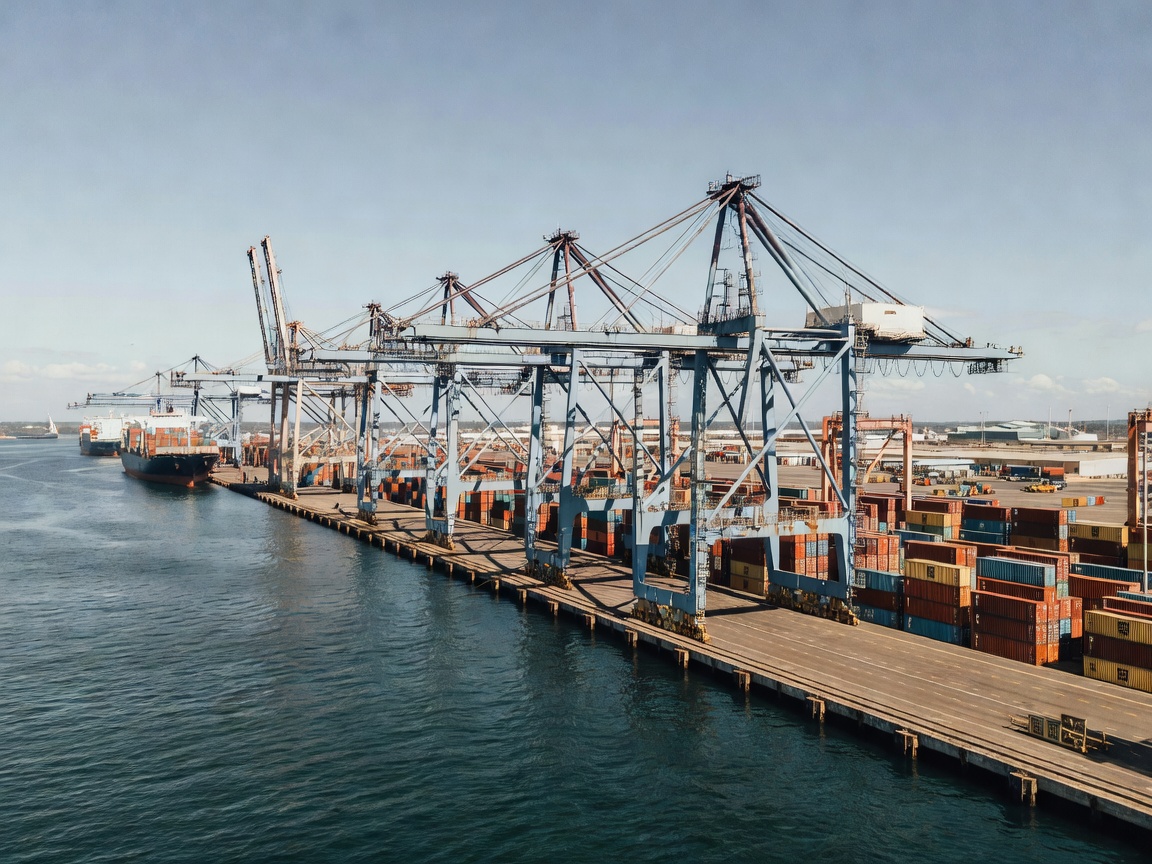
Port Botany handles the vast majority of containerized imports and exports for New South Wales, processing millions of TEUs (Twenty-foot Equivalent Units) annually. The port is home to multiple competing stevedoring companies operating state-of-the-art terminals. These facilities utilize massive ship-to-shore gantry cranes and increasingly automated ground logistics systems, including automated straddle carriers and stacking cranes, to maximize efficiency and turnaround times.
The speed at which a vessel can be unloaded, reloaded, and dispatched is a critical metric for shipping lines. Port Botany consistently invests in dredging and infrastructure to ensure it can accommodate the new generation of ultra-large container vessels (ULCVs) navigating the Asia-Pacific trade routes.
Bulk Liquids Facility
In addition to containers, Port Botany is a critical hub for bulk liquid imports. Specialized berths handle aviation fuel, motor spirits, and industrial chemicals. Given its proximity to Sydney Airport (Kingsford Smith), a direct pipeline delivers aviation fuel from the port directly to the airport's storage tanks, forming a seamless and critical supply chain that keeps Australia's busiest airport operating.
Road and Rail Integration
Moving goods through the port is only the first step; distributing them across the state is an equally formidable logistical challenge. Historically reliant heavily on road transport via semi-trailers and B-doubles, strategic policy has increasingly focused on shifting a higher percentage of freight to rail.
Dedicated freight rail lines connect Port Botany to intermodal terminals in western and south-western Sydney. This modal shift helps reduce road congestion around the port precinct and lowers greenhouse gas emissions associated with the supply chain.
Environmental Stewardship
Operating a major industrial facility within an estuarine environment requires rigorous environmental oversight. Port Botany encompasses several protected habitats, and port authorities manage strict protocols regarding ballast water exchange, noise pollution, and the protection of local marine life and shorebird populations.