Circular Quay & Terminals
The beating heart of Sydney's passenger and cruise operations.
Circular Quay is globally recognized as the central hub of Sydney Harbour. Flanked by the iconic Sydney Harbour Bridge and the Sydney Opera House, it serves dual purposes as a major commuter transport interchange and the premier destination for international cruise ships entering New South Wales.
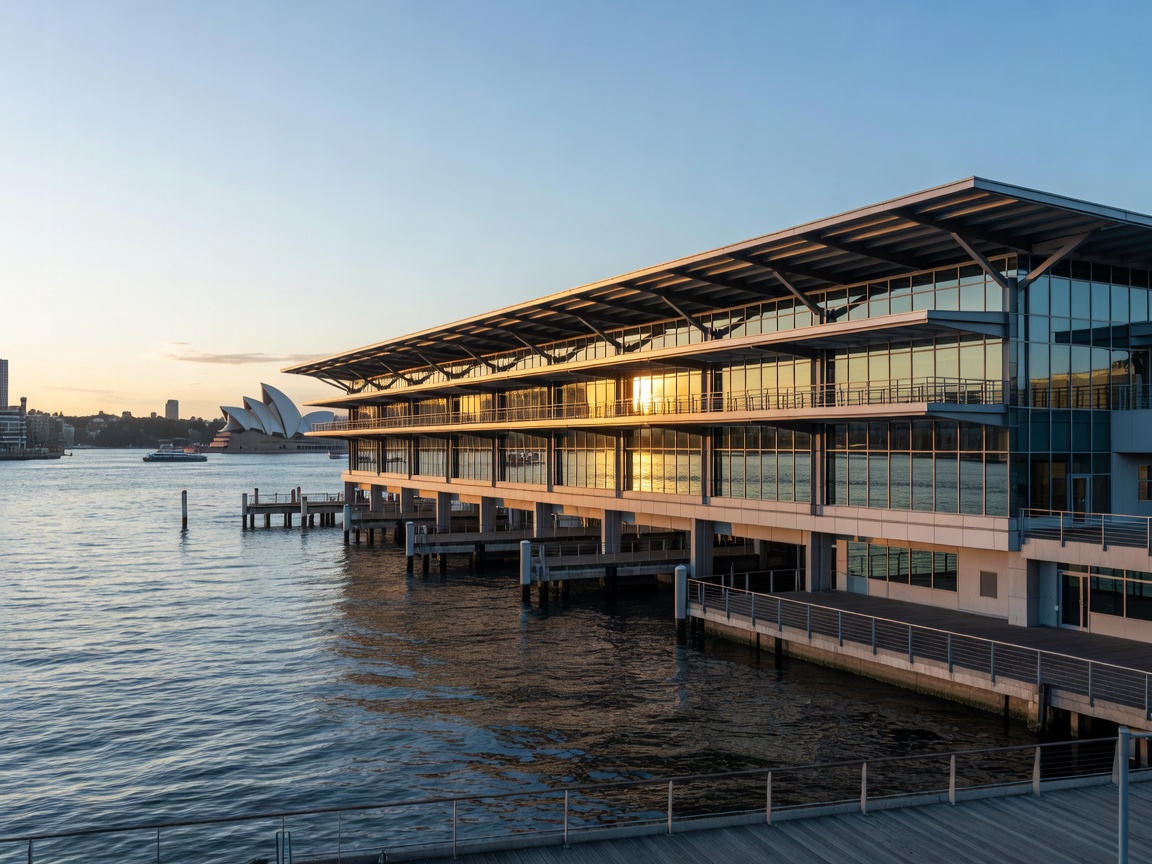
The Overseas Passenger Terminal (OPT)
Located on the western side of Circular Quay, nestled in the historic Rocks precinct, the Overseas Passenger Terminal is a dedicated facility for accommodating massive international cruise liners. Due to the height constraints imposed by the Sydney Harbour Bridge, the world's largest cruise ships—those exceeding bridge clearance levels—must berth at the OPT rather than proceeding further west up the harbour.
The facility has undergone extensive upgrades over recent decades to manage the exponential growth in the global cruise industry. Today, it features expanded customs and immigration halls, optimized baggage handling logistics, and a strengthened wharf capable of withstanding the immense lateral forces exerted by modern mega-ships.
Commuter Ferries and Public Integration
Beyond international tourism, Circular Quay is the nexus of Sydney's commuter ferry network. The sprawling complex of wharves handles tens of thousands of daily commuters traveling to destinations like Manly, Taronga Zoo, Parramatta, and Watsons Bay. The seamless integration of maritime transport with heavy rail and light rail at the adjacent Circular Quay station makes it one of the most efficient multi-modal transit nodes in Australia.
Operational Challenges and Environmental Considerations
Operating a major working terminal in the center of a densely populated global city presents unique challenges. The Port Authority and terminal operators must carefully balance the economic benefits of the cruise industry with the environmental and lifestyle impacts on local residents.
Key operational focuses include managing emissions, mitigating noise pollution from generators, and coordinating the massive logistical exercise of provisioning ships. When a mega-ship is in port, it requires the simultaneous movement of thousands of passengers, mountains of luggage, and dozens of supply trucks, all within a tightly constrained heritage precinct.
Looking to the Future
As cruise ships continue to grow in size and capacity, the demands on Circular Quay will increase. Strategic planning involves adopting shore power (cold ironing) technology to allow docked ships to plug into the local electrical grid rather than running their diesel engines. This transition is seen as a critical step in preserving the air quality around the harbor while maintaining Sydney's status as a world-class maritime destination.